By: Contech Engineered Solutions
Summary
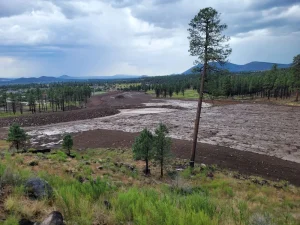
After devastating wildfires left communities near Flagstaff, Arizona vulnerable to catastrophic flooding, Coconino County needed a stormwater pipe solution fast. Originally designed with reinforced concrete box culverts, the emergency flood mitigation effort ultimately converted to corrugated steel pipe to overcome severe logistical challenges, compressed timelines, and difficult site conditions. By using onsite pipe manufacturing and more than 2 miles of large-diameter corrugated steel pipe, the team created a resilient flood mitigation system designed to protect homes and families for decades.
When wildfires tore through the foothills north of Flagstaff, Arizona, the damage did not end when the flames disappeared. Instead, a new threat emerged. Burned hillsides, destabilized soil, and destroyed vegetation transformed routine rainfall into a dangerous flood risk. For communities already devastated by wildfire, the future suddenly looked uncertain. However, one stormwater pipe solution helped turn a crisis into long-term protection.
From Wildfire to Flood Emergency
The 2026 Conversions Project of the Year Winner began after two major wildfires reshaped the landscape surrounding the San Francisco Peaks near Flagstaff. First, the Tunnel Fire scorched nearly 20,000 acres in April 2022. Then, less than two months later, the Pipeline Fire burned more than 27,000 additional acres across steep mountain terrain. Together, the fires damaged nine watersheds and increased flood danger for more than 1,500 homes.
As vegetation disappeared and soils weakened, post-fire runoff projections reached levels 10 to 31 times greater than pre-fire conditions. Meanwhile, Arizona’s intense monsoon season made matters worse. Heavy rains unleashed destructive runoff carrying ash, debris, sediment, and even boulders into nearby communities. During the 2022 monsoon season alone, the region experienced 45 major flood events. Consequently, county leaders faced an urgent need for a long-term stormwater pipe solution to protect residents.
Why This Flood Mitigation Project Converted to Steel
To stabilize the damaged watersheds, the Coconino County Flood Control District secured more than $130 million in federal, state, and local funding for emergency restoration efforts. Yet, timing quickly became a major obstacle. More than $60 million came through the Natural Resources Conservation Service Emergency Watershed Protection Program, which required funds to be used within just 220 days. At the same time, Flagstaff’s high elevation limited construction windows due to weather conditions.
Initially, the project team considered reinforced concrete box culverts. However, the proposed 10-foot-by-10-foot sections created a major logistical problem. Because each section could only be shipped in 6-foot lengths, the project would have required an estimated 11,000 truckload trips to complete. For a residential area already recovering from disaster, that level of disruption simply did not make sense.
Instead, the County converted to a corrugated steel stormwater pipe solution using 10-gauge Aluminized Type 2 ULTRA FLO® Spiral Rib Metal Pipe manufactured by Contech Engineered Solutions. The shift dramatically reduced transportation demands while accelerating project delivery. More importantly, it created a practical path forward under extreme timeline pressure.
The Mobile Mill That Changed Everything
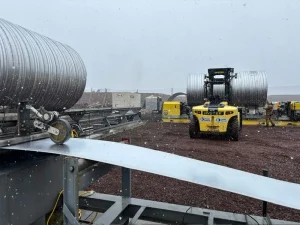
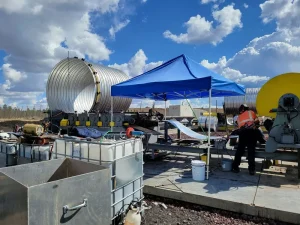
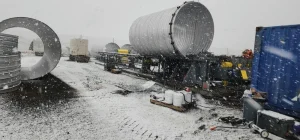
One of the most unique aspects of this flood mitigation project involved how the pipe was produced. Rather than relying solely on offsite fabrication, Contech deployed its MOBILE PIPE® onsite mill directly adjacent to the work area. As a result, 120-inch-diameter spiral rib pipe could be manufactured in 20-foot sections within 5 miles of the installation corridors.
That decision became a game changer.
By manufacturing pipe onsite, the project eliminated more than 1,000 truckload trips, reduced disruption to surrounding neighborhoods, improved quality control, and lowered the project’s environmental footprint. Additionally, localized production helped crews stay on schedule despite changing weather and evolving site conditions. For a project operating under emergency deadlines, this stormwater pipe solution delivered flexibility that traditional materials could not easily match.
Engineering for Long-Term Protection
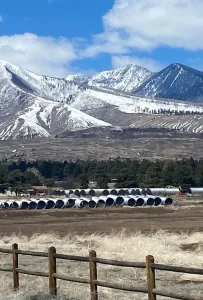
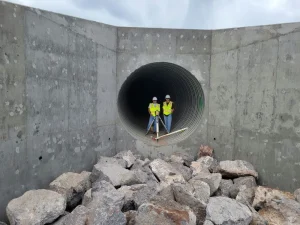
The project ultimately incorporated more than 11,000 linear feet of large-diameter corrugated steel pipe across six storm drain corridors. Pipe diameters ranged from 60 inches to 120 inches, with systems engineered to handle approximately 1,800 cubic feet per second during peak flow conditions. In some locations, alignments extended nearly 20 feet below grade and crossed private residential properties.
Of course, installation precision mattered. Maintaining pipe roundness, proper bedding, backfill compaction, joint alignment, and accurate line and grade proved critical to long-term performance. Yet, strong coordination among Coconino County, Civiltec, Tiffany Construction, and Contech kept the work moving forward through four construction phases between 2023 and 2025.
For residents, though, the project meant something far more personal. According to Coconino County Flood Control District Administrator Lucinda Andreani, families in the flood zone shared a simple message after improvements began: “We and our children can sleep again at night.”
A Conversion Built for Resilience
In the aftermath of devastating wildfires, Coconino County faced an impossible challenge. Officials needed a flood mitigation system that could move quickly, perform reliably, and minimize impacts on already struggling communities. By converting from reinforced concrete to corrugated steel, the team delivered a resilient stormwater pipe solution designed to protect residents for decades.
The result was more than an emergency response. It became a model for how thoughtful engineering, collaboration, and innovation can transform disaster recovery into lasting infrastructure resilience.
Related Stories
2023 Project of the Year – Conversion Winner: The Cubes at Inland Woods
Proven Stormwater Infiltration System Replaces Failed Design in Pennsylvania
Resiliency