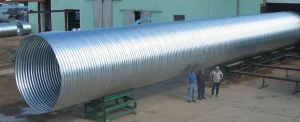
Standard corrugated steel pipe (CSP) is a durable, economical solution for culverts, storm sewers, drainage conveyance, detention systems, and other infrastructure applications. Designed to provide long-term structural performance through proven steel-soil interaction, standard CSP is widely used in transportation, municipal, agricultural, and site development projects.
Available in a range of diameters, gauges, corrugation profiles, and coatings, standard corrugated steel pipe can be customized to meet hydraulic requirements, environmental conditions, loading demands, and service life expectations. Whether used for roadway drainage, stream crossings, stormwater management, or culvert replacement projects, standard steel pipe systems offer flexibility and reliable field performance.
Common Applications for Standard Corrugated Steel Pipe
Standard corrugated steel pipe is commonly used for:
• Culverts and cross drains
• Storm sewer systems
• Agricultural drainage applications
• Stream crossings and water conveyance
• Detention and retention infrastructure
• Highway and transportation drainage projects
Depending on project requirements, engineers may also consider related systems such as Double Wall Pipe for enhanced hydraulic performance or Pipe Arches when increased waterway area with reduced rise is needed.
Benefits of Standard Corrugated Steel Pipe
Standard corrugated steel pipe is widely used because it provides a strong combination of structural performance, durability, and design flexibility for drainage infrastructure projects. Engineers, agencies, and contractors often select standard CSP for its ability to perform in a wide range of hydraulic and environmental conditions.
Key benefits include:
- Proven structural strength through steel-soil interaction that distributes loads efficiently
- Long service life with multiple coating options available to support environmental and project-specific requirements
- Versatile applications suitable for culverts, storm sewers, detention systems, stream crossings, and drainage conveyance
- Wide range of diameters and corrugation profiles to meet varying hydraulic and loading needs
- Lightweight and efficient installation compared to many alternative materials, helping reduce transportation and construction challenges
- Sustainable material choice made from recycled steel and fully recyclable at the end of service life
- Domestic manufacturing availability supporting Buy America and BABA requirements for infrastructure projects
Depending on project requirements, engineers may also evaluate Double Wall Pipe for improved hydraulic efficiency or review available corrugated steel pipe coatings to support durability goals in more challenging environments.
Corrugation Profiles and Sizes
Standard corrugated steel pipe is available in multiple corrugation profiles and sizes to meet varying hydraulic, structural, and project requirements. Profile selection depends on pipe diameter, loading conditions, installation environment, and anticipated performance needs.
Common corrugation profiles include:
• 2⅔” x ½” corrugation for smaller diameter applications and general drainage systems
• 3″ x 1″ corrugation commonly used for culverts and storm sewer applications requiring additional structural performance
• 5″ x 1″ corrugation for larger diameter pipe and higher loading conditions
• 6″ x 2″ corrugation for larger drainage infrastructure and specialized applications
Standard corrugated steel pipe is manufactured in a broad range of diameters to support culverts, storm sewers, detention systems, and water conveyance projects. Engineers can compare available dimensions and design considerations using the Design Specifications Chart and additional Technical Resources.
Corrugated Steel Pipe Coatings and Service Life
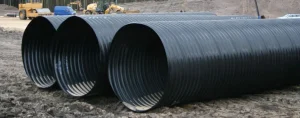
Standard corrugated steel pipe is available with multiple coating options to support durability and long-term performance in varying environmental conditions. Engineers can evaluate available corrugated steel pipe coatings, including Aluminum Coated Type 2 (ALT2) and polymer-coated steel pipe systems for additional corrosion protection.
Environmental conditions, water chemistry, and site characteristics all play a role in expected service life. For durability planning, explore the Service Life Calculator to estimate long-term performance based on site conditions.
Engineering Resources for Steel Drainage Pipe
Selecting the right steel drainage pipe depends on hydraulic requirements, anticipated loading, installation conditions, and project goals. Engineers and designers can explore the Minimum Cover Requirements resource, compare product details using the Design Specifications Chart, or review additional Technical Resources for design guidance.
Standard corrugated steel pipe systems are manufactured to recognized industry standards, including applicable ASTM specifications and AASHTO guidance for drainage infrastructure design. Additional design guidance, specifications, and technical information are available throughout NCSPA’s engineering resource library to support project planning and product selection.