The NCSPA Structural Plate Service Life Calculator helps engineers, DOT professionals, municipalities, and drainage designers estimate the expected service life of corrugated steel structural plate systems based on environmental and site-specific conditions.
Use this structural plate service life calculator to evaluate how pH, soil resistivity, abrasion level, road salt exposure, coatings, and paved inverts may influence long-term durability and expected performance. Open-bottom structure service life can vary depending on abrasion, corrosion, flow conditions, and the use of supplemental protection measures.
For additional information on structural plate durability, corrosion considerations, design methodology, and service life assumptions, review the engineering guidance and design information below the calculator.
Structural Plate Service Life Calculator
Estimate service life recommendations for corrugated steel structural plate based on environmental conditions and project-specific protection options.
Designing for Structural Plate Service Life
After a structure shape and size is selected based upon hydraulic or clearance requirements and the structure gage is determined, the designer should normally proceed to an analysis of the possible effects of the environment on structure performance. This may lead the designer to specific selections of material, structure type, coating, or invert protection.
Environmental Factors That Affect Structural Plate Service Life
Corrosive backfill conditions can affect structural plate service life. More commonly, corrosion and abrasion from flow conditions affect the invert of the structure. The design life analysis of the structure should include a check for both water side and soil side environments to determine which is most critical or which governs structure life.
The choice of material or structure type can be extremely important to service life. If it is determined that water flowing through a structure is projected to limit the life of the invert through abrasive or corrosive action, an alternative structure type such as a steel box culvert or a natural invert configuration may be considered. Other possible remedies may exist depending upon other structure requirements.
Galvanized Steel Structural Plate Service Life
Galvanized steel structural plate systems provide long-term durability for culverts, buried bridges, and drainage structures in a wide range of environmental conditions. With regard to the durability of galvanized steel structural plate, this design guide will outline the guidelines established by the California Department of Transportation (CALTRANS).
The CALTRANS design method originated from a study that inspected over 7,000 galvanized steel corrugated metal pipe (CMP) drainage structures throughout the state of California. The field study helped CALTRANS develop a reliable method for predicting the service life of smaller diameter corrugated galvanized steel pipe systems. The data collected reflected the combined effects of corrosion and a wide range of abrasive levels.
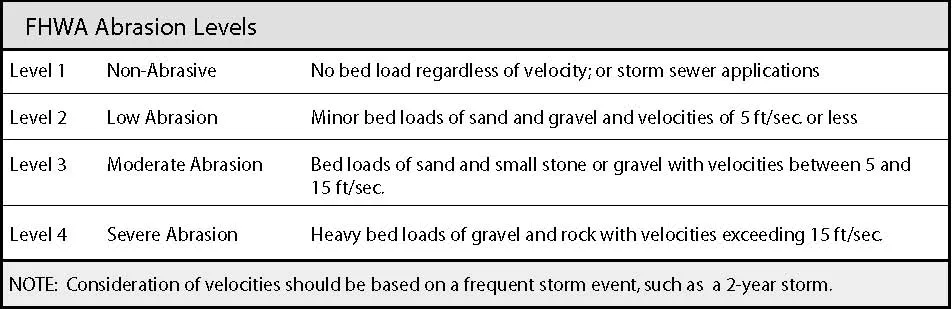
Understanding the CALTRANS Service Life Method
The conclusion of the CALTRANS study defined the end of the structure life to be coincident with the first perforation (or approximately 12% metal loss) in the invert of culverts that have received no special maintenance.
The CALTRANS chart estimates the service life of 2 oz. per square foot zinc-coated galvanized CMP (see page 8). This chart predicts a variable service life based on pH and resistivity of water and soil and has been the industry standard for many years. The results included the combined effects of soil-side and interior corrosion, as well as the average effects of abrasion. For pipes where the pH was greater than 7.3, soil-side corrosion controlled and life was predicted by resistivity. For pipes where pH was less than 7.3, the interior invert corrosion generally controlled and both pH and resistivity were important.
Understanding the AISI Service Life Method
It is important to note, the consequences of small perforations are minimal in gravity flow pipe systems, such as most storm sewers and larger culverts, and may not accurately reflect the estimated service life outlined by CALTRANS. Because of this fact, the original CALTRANS curves have been converted to average service life curves using data on weight loss and pitting in bare steel developed by National Institute of Standards and Technology. Using this information, the American Iron and Steel Institute (AISI) developed a durability chart using the end of an average effective service life to be estimated at approximately a 25% metal loss in the invert. Additional information regarding the AISI service life methodology and supporting resources can be found through NCSPA technical resources.
How Structural Plate Design Influences Service Life
In addition, the structural plate covered in this design guide utilizes a 3 oz. per square foot of zinc coating and uses heavier gage material as part of the structural design. This represents a 50% increase in zinc barrier coating and includes additional base metal thickness that was not evaluated in the original CALTRANS study. These two additional factors increase expected service life beyond what these charts predict.
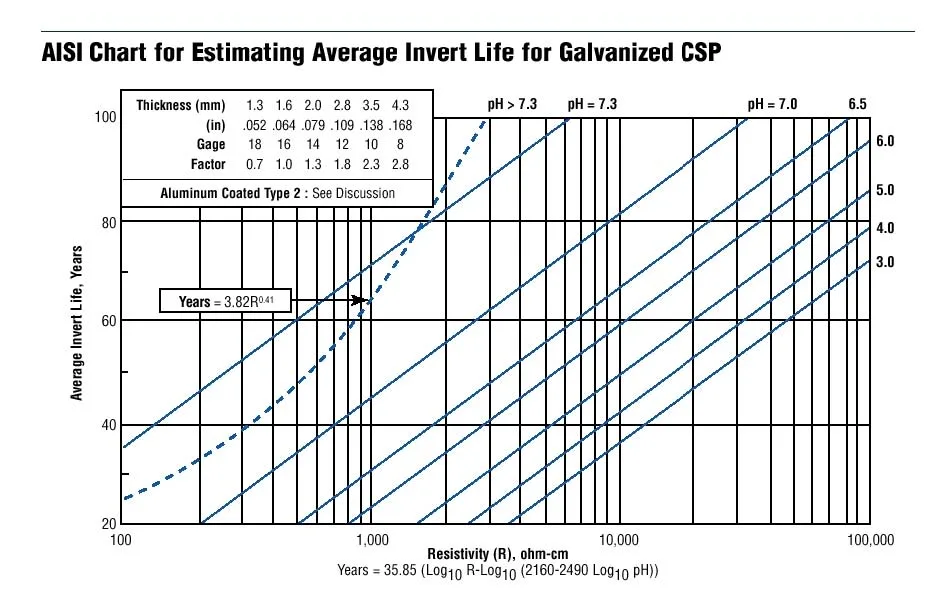
If the designer has site specific knowledge and understands the key design parameters, the AISI method may be more applicable in the pipe service life design. Many state DOTs find the CALTRANS method to be a conservative estimate of the average observed service life of galvanized steel structures in their states. Although a gravity flow drainage structure of any kind functions properly well beyond the occurrence of the first perforation, the use of the CALTRANS method best illustrates the variety of environmental conditions found throughout the country.
An important factor when choosing a design method, either CALTRANS or AISI, is knowledge of the structure backfill type. A structure backfilled with very fine material may be affected by the loss of this material through perforations. Thus, the CALTRANS method may be valid. If the backfill is more granular, which is usually the case with plate structures, then first perforation is probably inconsequential and, therefore, the AISI method would be more appropriate.
Frequently Asked Questions
How is structural plate service life determined?
Structural plate service life is estimated using environmental factors such as pH, soil resistivity, abrasion severity, road salt exposure, and the use of supplemental protection measures such as asphalt coatings or concrete paved inverts. The NCSPA Structural Plate Service Life Calculator incorporates recognized methodologies including CALTRANS and AISI to provide a preliminary estimate of expected service life.
What affects corrugated steel structural plate service life?
Several factors can affect corrugated steel structural plate service life, including soil and water chemistry, abrasion level, environmental exposure, structure type, coatings, invert protection, and whether an open-bottom structure is used. These conditions can significantly impact long-term durability and performance. Open-bottom structure service life may differ from enclosed drainage structures because environmental conditions and invert exposure can affect long-term durability.
What is the difference between the CALTRANS and AISI service life methods?
The CALTRANS method estimates service life based on the occurrence of first perforation in galvanized steel drainage structures. The AISI method estimates average effective service life based on greater metal loss and may be more applicable for some structural plate applications where first perforation is not considered critical to overall function.
Why are pH and resistivity important for structural plate service life?
pH and resistivity are important because they help estimate the corrosive potential of soil and water environments surrounding the structure. Lower pH and lower resistivity values may indicate more aggressive environments that can reduce structural plate service life.
Can coatings and paved inverts extend service life?
Yes. Supplemental protection measures such as asphalt coatings and concrete paved inverts may extend structural plate service life in certain applications by improving resistance to corrosion and abrasion. Site conditions and engineering requirements should always be evaluated during design. Galvanized steel structural plate systems provide long-term durability for culverts, buried bridges, and drainage structures in a wide range of environmental conditions.
General Design Notes:
- User must also check structural requirements for gage selected.
- For further information see:
Copyright © National Corrugated Steel Pipe Association