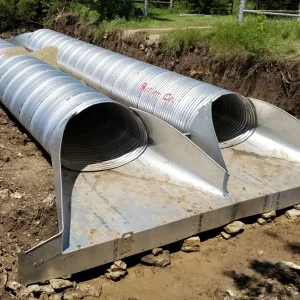
 Corrugated steel pipe fittings and end treatments provide engineers and contractors with flexible solutions to address hydraulic performance, alignment changes, drainage transitions, and site-specific construction requirements. Because corrugated steel systems can be economically fabricated into a wide range of configurations, corrugated steel pipe fittings are commonly used to improve drainage efficiency, avoid utilities, adapt to changing site conditions, and optimize culvert performance.
Fabricated fittings are commonly created from curved corrugated steel plates or pipe sections that are shop assembled to meet project-specific geometry and hydraulic requirements. These systems are typically trial fit in the fabrication shop and clearly marked to support efficient field assembly and installation. Engineers specifying drainage pipe fittings often select fabricated steel components when standard pipe configurations cannot accommodate site constraints, utility conflicts, or hydraulic transitions.
Culvert end treatments are frequently used to improve inlet and outlet performance, reduce scour, protect embankments, and increase hydraulic efficiency. Depending on site conditions, end treatments may also improve safety, stabilize fill slopes, discourage burrowing animals, and support long-term drainage system performance.
Common Types of Corrugated Steel Pipe Fittings
Fabricated corrugated steel pipe systems are available in a wide range of configurations to support hydraulic transitions, alignment changes, and project-specific drainage requirements.
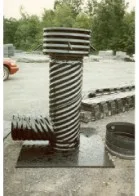
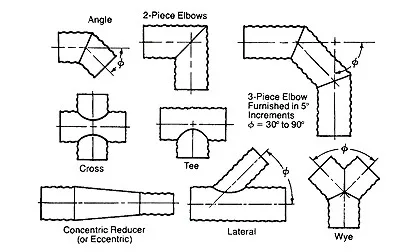
Common corrugated pipe fittings include:
- Elbows for directional changes and alignment adjustments
- Tees and wyes for combining or diverting drainage flows
- Reducers for transitioning between pipe diameters
- Laterals and crosses for complex drainage system configurations
- Custom fabricated fittings designed to accommodate unique site conditions or underground utility conflicts
Because fabricated steel fittings can be customized, engineers frequently specify these systems to work around underground impediments, connect multiple drainage systems, or improve overall hydraulic performance.
Culvert End Treatments and Hydraulic Performance
The primary purpose of culvert end treatments is to improve hydraulic performance and reduce erosion at the inlet and outlet of drainage systems. Properly designed end treatments can help prevent scour, minimize undermining, increase flow efficiency, and protect surrounding embankments.
Common end treatment options include:
- Flared and prefabricated end sections to improve hydraulic efficiency and flow transitions
- Safety slope end sections to improve roadside safety and embankment stability
- Skews and beveled ends to match drainage alignment and maximize inlet performance
- Riprap and erosion protection systems to reduce scour at outlets
- Steel sheeting and low headwall applications for cutoff wall and embankment support
Depending on hydraulic requirements and site geometry, engineers may select customized pipe end sections to improve culvert performance and reduce long-term maintenance requirements.
Benefits of Fabricated Drainage Pipe Fittings
Corrugated steel fabricated fittings and end treatments are frequently selected because they provide:
- Exceptional design flexibility for complex drainage systems and alignment changes
- Hydraulic optimization to improve inlet and outlet performance
- Utility avoidance flexibility for constrained installation environments
- Efficient field installation through prefabricated and shop-tested assemblies
- Long service life with multiple coating options for corrosion protection
- Custom fabrication capabilities for unique hydraulic and site-specific requirements
Design Resources and Engineering Guidance
Designing fabricated fittings and end treatments requires evaluation of hydraulic conditions, inlet and outlet performance, alignment requirements, scour protection, and long-term durability. Engineers and designers can review Design Resources, compare product requirements using the Design Specifications Chart, and explore Technical Resources for engineering guidance.
Engineers may also review Standard Corrugated Steel Pipe, Pipe Arches, and Structural Plate Systems when evaluating broader drainage system requirements.
For additional support, engineers can review the Corrugated Steel Pipe Design Manual, contact an NCSPA Member Supplier, or review completed applications through Project Spotlights.
Fabricated corrugated steel systems are designed to recognized industry standards and may be specified in accordance with applicable ASTM specifications and AASHTO guidance.