By: Culvert Tech
Project Summary
After catastrophic flooding exposed the limitations of an existing river crossing in Düzce, Türkiye, officials turned to a larger corrugated steel structure. The new crossing provides greater hydraulic capacity while supporting safer, more resilient infrastructure.
Rebuilding After a Devastating Flood
Infrastructure resilience can become painfully tangible after a natural disaster.
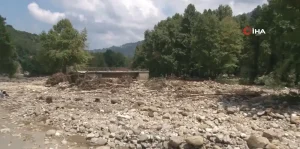
In Düzce, Türkiye, a catastrophic flood devastated the surrounding community and claimed seven lives. The flood also demonstrated the vulnerability of infrastructure built around a changing river system.
Over time, increased flows, heavy rainfall, and changes in the river’s flow regime had exceeded the capabilities of an existing bridge. Its hydraulic capacity and structural performance could no longer meet current needs.
The State Hydraulic Works, known as DSİ, evaluated the crossing and determined that replacement was necessary. The agency selected a corrugated steel solution designed around the site’s hydraulic, geotechnical, and environmental conditions.
For a community that had already experienced the consequences of extreme flooding, this was more than a routine bridge replacement. It was an opportunity to rebuild with resilience in mind.
Designing for Greater Hydraulic Capacity
The replacement structure measures approximately 69 feet wide and 18 feet high. Its large open-section profile provides substantially more room for water to move through the crossing.
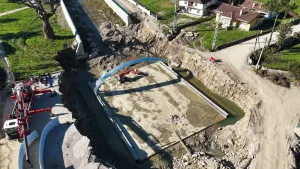
Hydraulic capacity was a central consideration throughout the engineering process.
Culvert Tech completed the engineering design, project planning, and installation work. The company evaluated hydraulic requirements alongside site-specific geotechnical and environmental conditions before finalizing the structure.
That approach reflects a broader principle behind corrugated steel culvert design. The structure must work with the hydraulic demands of its environment while meeting transportation and structural requirements.
The wide opening also demonstrates the versatility available with steel structural plate systems. Large-span configurations can address sites where conventional drainage structures may not provide sufficient capacity.
Speed Matters When Communities Need Infrastructure Back
Safety was not the project’s only priority. DSİ also needed a solution that could move efficiently from manufacturing through field installation.
That requirement helped drive the decision to use corrugated steel.
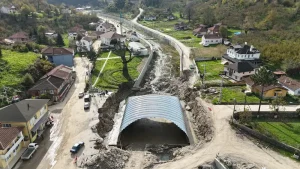
The structural components were fabricated by Hengshui Yitong, while Baytimur İnşaat served as contractor. Culvert Tech managed engineering, project planning, and installation.
Corrugated steel systems can provide significant construction advantages because crews assemble structural components on site. This approach can reduce the logistical demands associated with other large bridge systems.
Those advantages become particularly valuable following infrastructure failures. Restoring transportation networks quickly can help reconnect communities while recovery continues around them.
NCSPA’s overview of corrugated steel bridge systems highlights rapid construction and reduced road closures among the advantages of these structures.
Building Resilience Into the Replacement
The Düzce project illustrates an increasingly important challenge for infrastructure owners.
Existing structures must perform under environmental conditions that may differ significantly from those considered when they were originally built.
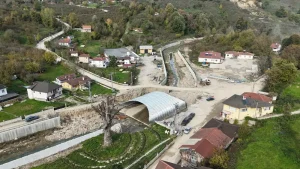
At this location, changing flow conditions and recent heavy rainfall events placed increasing demands on the old bridge. Eventually, the existing structure could no longer provide the hydraulic capacity required at the crossing.
The replacement responds directly to those conditions.
Corrugated steel combines structural strength with flexibility, which makes it well suited for demanding transportation and hydraulic environments. More information about those performance characteristics is available through NCSPA’s Why Steel resources.
Engineers evaluating similar large-span structures can also use NCSPA’s structural plate design resources for hydraulic, structural, and installation guidance.
A Crossing Designed Around What the River Requires
The contrast between the post-disaster photographs and the new structure tells the project’s story clearly.
Floodwaters had reshaped the site, deposited debris and sediment, damaged surrounding property, and demonstrated the limitations of the previous crossing.
The replacement takes a different approach. Rather than simply recreating what existed before, the project provides a substantially larger opening designed around current hydraulic requirements.
Following installation, backfilling and landscaping remained underway as weather conditions allowed.
Once completed, the new crossing will provide a safer and more resilient connection for the Düzce community. More importantly, it represents infrastructure designed with the lessons of the site’s past firmly in mind.
Engineers considering similar projects can explore additional technical resources for corrugated steel and structural plate through NCSPA.
For more information about Türkiye’s State Hydraulic Works and its role in water infrastructure, visit DSİ.