By: Lane Enterprises, LLC
Project Summary
Two deep corrugated steel structural plate arches replaced fish barriers along Padden Creek in Bellingham, Washington. The improvements restored fish passage, enhanced stream habitat, and maintained crossings along the popular Interurban Trail.
A Clearer Path for Salmon in Padden Creek
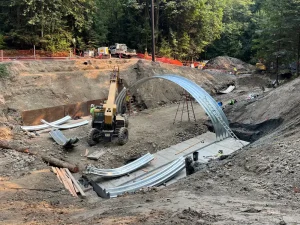
Sometimes, the success of an infrastructure project can be measured by what returns to the environment. In Bellingham, Washington, salmon have already been spotted upstream of two newly replaced culvert crossings along Padden Creek. Their presence offers encouraging evidence that a major fish passage restoration effort is working as intended.
The Padden Creek at 12th and 14th Streets Fish Passage Improvements Project replaced two existing fish barriers with large, deep corrugated steel structural plate arches. Located along the Interurban Trail, the improvements support aquatic habitat while preserving an important recreational connection. Fabricated by Lane Enterprises, LLC, the new steel arches demonstrate how modern fish passage solutions can support environmental restoration and infrastructure needs. The project also represents another step in the City of Bellingham’s broader strategy to remove barriers that restrict fish movement throughout its waterways.
Removing Barriers Along an Important Waterway
Padden Creek provides habitat for several fish species, including Chinook, coho, and chum salmon, steelhead, and sea-run cutthroat trout. Resident fish species also depend on the creek’s aquatic environment. However, two existing culvert crossings near 12th and 14th Streets restricted fish movement along the waterway, limiting access to upstream habitat.
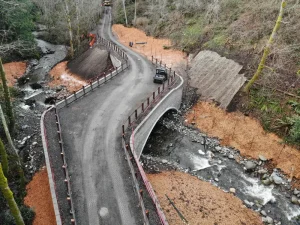
Both crossings sit along the Interurban Trail, a 6.5-mile recreational route connecting Fairhaven and Larrabee State Park. The City of Bellingham identified both locations as high priorities through its Fish Barrier Prioritization process. Replacing these barriers would reconnect portions of the creek and improve access to upstream habitat while maintaining the trail’s recreational function. The city’s objective was to make both crossings fully passable for fish.
The project illustrates an important consideration in modern culvert replacement projects. Infrastructure improvements can address more than drainage capacity or structural performance. They can also create opportunities to restore aquatic connectivity and improve conditions for wildlife.
Deep Corrugated Steel Arches Provide the Solution
To replace the existing fish barriers, the project incorporated two large, double-radius structural plate arches. Each arch features a span of 43 feet, 4 inches and a rise of 14 feet, 8 inches. Both structures use 7-gage steel plate with a deep corrugation profile measuring 15 inches by 5½ inches. The arches also accommodate nearly 7 feet of cover beneath the trail crossings, providing substantial openings while maintaining the infrastructure above.
The arches demonstrate the versatility of structural plate systems, particularly for applications requiring large spans and specialized geometries. Unlike conventional enclosed culverts, steel arch structures can span a waterway while leaving the stream channel beneath the opening. This configuration supports fish passage designs that seek to maintain more natural aquatic conditions.
Structural plate systems also offer flexibility in shape and size, allowing designers to accommodate challenging site requirements. These advantages make corrugated steel an important option for buried bridge applications where environmental considerations influence structural design. At Padden Creek, the arches provide a practical example of steel infrastructure supporting both recreational access and aquatic habitat restoration.
Restoring Stream Habitat Beyond the Crossings
Replacing the culverts was only part of the Padden Creek restoration effort. The project also incorporated wing walls and large woody debris to improve conditions within the surrounding stream corridor. Large woody debris serves several important functions in aquatic environments, including creating habitat, stabilizing streambanks, and influencing how water moves through a channel.
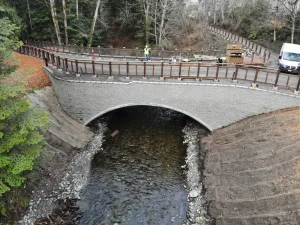
At Padden Creek, these additions were specifically intended to support habitat creation, streambank stabilization, and streamflow management. Together, the new crossings and habitat improvements address the broader environmental conditions surrounding the former fish barriers. This approach reflects a growing emphasis on infrastructure that works with natural systems rather than simply moving water beneath roads and trails.
For fish-bearing streams, the shape and condition of the waterway can be just as important as the structure crossing above it. The Padden Creek improvements demonstrate how corrugated steel infrastructure can become part of a larger environmental restoration strategy, providing the structural performance communities need while supporting healthier aquatic environments.
Salmon Return as Fish Passage Improvements Take Effect
In-water construction activities were completed in fall 2025, allowing Padden Creek to flow freely beneath both new steel arches. The completed crossings were designed to provide 100% fish passage for the species using the creek. Early observations suggest the improvements are delivering the intended results, with salmon already spotted upstream of the project area. Their presence indicates that fish can successfully move through the new crossings.
That observation represents an important milestone for the City of Bellingham’s ongoing fish barrier removal efforts. For the community, the project maintains a valued recreational corridor while improving the natural environment beneath it. For the creek’s fish populations, removing two high-priority barriers improves access to habitat that previously faced passage restrictions.
The Padden Creek project demonstrates how steel fish passage structures can support environmental restoration without compromising essential transportation and recreational connections. By combining large-span structural plate arches with stream habitat improvements, the City of Bellingham has taken another meaningful step toward restoring aquatic connectivity. The project’s success is visible both above and below the crossings, as the Interurban Trail continues across Padden Creek while fish once again have a clearer path through the waterway.