By: Atlantic Industries Limited
Project Summary
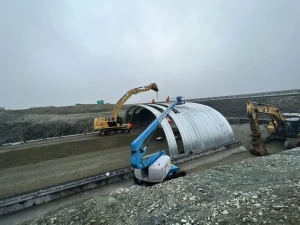
The 2024 DOT Project of the Year utilized a structural plate arch to create a new connection to the Trans-Canada Highway while supporting future growth in St. John’s, Newfoundland and Labrador. The project delivered improved access, reduced truck travel, lower emissions, and long-term transportation benefits through an innovative buried bridge solution.
A Transportation Need Years in the Making
Major infrastructure projects often begin years before construction starts.
In 2013, plans for a 2,000-acre commercial development in St. John’s identified the need for direct access to the Trans-Canada Highway. Over the next decade, consultants evaluated multiple alternatives to provide access while supporting future growth throughout the region.
By 2021, Newfoundland and Labrador Transportation and Infrastructure had determined the project would move forward and be tendered for construction. The completed interchange now serves as a critical piece of transportation infrastructure, supporting both commercial development and regional mobility.
Evaluating Structural Plate Arch Alternatives
In 2021, a request for proposals was issued for design services associated with the interchange project.
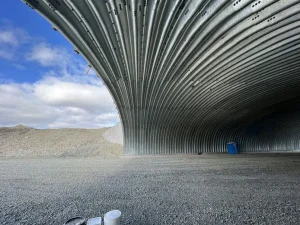
Atlantic Industries Limited worked closely with consultants and project stakeholders to evaluate a structural plate arch solution against conventional concrete girder bridge alternatives. During the review process, the owner analyzed both construction and lifecycle considerations before selecting the structural plate option.
The owner ultimately chose the structural plate arch because it offered reduced construction costs, shorter construction schedules, lower social impacts during construction, and reduced long-term maintenance requirements.
Engineers evaluating similar transportation projects can explore NCSPA’s Technical Resources and Design Data Sheets for additional information on buried bridge and structural plate applications.
The project also highlights how buried bridge solutions continue to expand into applications traditionally served by conventional bridges. Similar transportation benefits were achieved in the Historic Yellow Mill Bridge Rehabilitation Supports Bridgeport Redevelopment, where a buried bridge solution helped address challenging site constraints while supporting future development.
Designing for Long-Term Performance
Durability and resilience were important considerations throughout the design process.
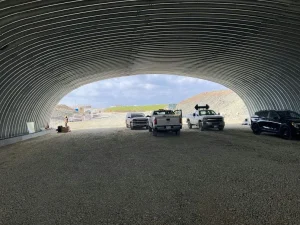
Atlantic Industries Limited worked with the owner to incorporate a waterproofing membrane above the arch and a concrete splash wall designed to reduce road salt exposure. Both features were included to improve long-term performance and reduce maintenance requirements throughout the service life of the structure.
The final structural plate arch geometry consisted of an 83.44-foot span, a 21.05-foot rise, and a 141.08-foot length. The structure provides clearance for a four-lane roadway with a center median barrier while also accommodating recreational vehicle access on both sides.
Engineers evaluating similar buried bridge structures can utilize NCSPA’s Structural Plate Service Life Calculator and review additional research within NCSPA’s Studies & Reports library when considering long-term durability.
Fast Construction with Minimal Disruption
Construction efficiency was one of the key advantages of the selected structural plate arch solution. The speed of installation demonstrated another advantage of buried bridge construction, allowing crews to complete the crossing while reducing impacts to surrounding transportation networks.
The contractor assembled the structure using 215 plates and completed erection in just seven days. This rapid installation significantly reduced construction impacts while helping keep the project on schedule.
Shorter construction durations can reduce disruptions for motorists, contractors, and surrounding communities. Similar benefits were realized on the Lincoln South Beltway Improves Mobility and Supports Future Growth in Nebraska, where corrugated steel infrastructure helped support a major transportation corridor improvement.
Reducing Traffic and Emissions
The benefits of the project extend well beyond the structure itself.
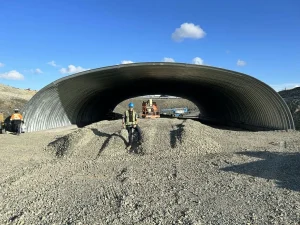
The interchange serves as the primary highway access point to St. John’s largest construction quarry and ready-mix facility located across the Trans-Canada Highway. Prior to construction, trucks traveled an additional 3.12 miles to access the highway network. The improved highway access created by the project significantly reduced travel distances and operating costs.
The new interchange eliminates approximately 16,156 miles of truck travel annually. Project estimates indicate this reduction translates into approximately 42 tons of carbon dioxide emissions avoided each year.
These environmental benefits align with the goals highlighted in NCSPA’s Sustainability initiative. Agencies evaluating transportation improvements can also use NCSPA’s Environmental Calculator to better understand the potential environmental impacts of infrastructure decisions.
Supporting Future Transportation Infrastructure
The Exit 41 Interchange demonstrates how structural plate arch systems can provide cost-effective alternatives to conventional bridge construction while supporting long-term transportation infrastructure goals.
By improving highway access, reducing truck travel, lowering emissions, and minimizing long-term maintenance requirements, the project delivers benefits that extend far beyond the initial construction phase.
As development continues throughout the region, this award-winning structural plate arch will serve as a critical transportation asset supporting commerce, mobility, and future growth for decades to come.
Project Video: https://youtu.be/bxYP7npX75g