By: Metal Culverts, Inc
Project Summary
The 2023 ALT2 Project of the Year helped complete one of the largest and most complex Nebraska DOT projects in state history. Corrugated metal pipe played a critical role in managing drainage, improving safety, and supporting more than 43 miles of roadway infrastructure throughout the Lincoln South Beltway corridor.
A Vision More Than 60 Years in the Making
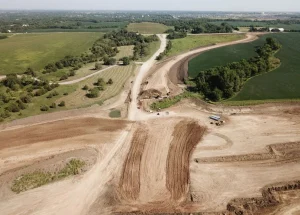
The idea of a beltway around south Lincoln, Nebraska, dates back to the 1960s. However, funding challenges and evolving transportation needs delayed the project for decades.
Over time, traffic volumes continued to increase along Highway 2 as commercial development expanded throughout south Lincoln. Heavy truck traffic became a growing concern for local residents, commuters, and businesses. The primary goal of the beltway was to divert nearly 80 percent of truck traffic from Highway 2 while improving safety and mobility throughout the region.
The completed Lincoln South Beltway stretches 11 miles and serves as a major east-west four-lane freeway. The project opened in spring 2023 and immediately became a key transportation corridor for the growing community.
A Highway Expansion Project Designed to Reduce Congestion
The Lincoln South Beltway was designed to improve travel efficiency while creating a safer transportation network for both local and commercial traffic.
By redirecting trucks away from heavily traveled urban corridors, the project helps reduce congestion, improve travel times, and enhance roadway safety. Similar transportation benefits can be seen in the North Dakota Highway 23 Roadway Improvements project, where infrastructure upgrades improved mobility and long-term roadway performance.
As one of the largest Nebraska DOT projects ever completed, the beltway required infrastructure solutions capable of supporting long-term performance across a wide variety of applications.
Why Corrugated Metal Pipe Was Selected
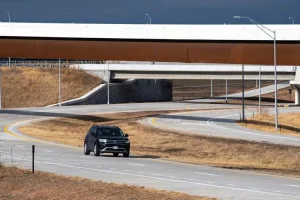
The project team evaluated several factors when selecting materials for the beltway. Competitive steel pricing, lighter weight, ease of installation, and long service life all contributed to the decision to utilize corrugated metal pipe throughout the corridor.
The project incorporated numerous driveway crossings, field accesses, runoff diversion systems, and roadway drainage applications. Depending on site requirements and service life objectives, the team utilized galvanized, aluminized, and polymer-coated corrugated metal pipe throughout the project.
Many of the advantages that influenced material selection are highlighted in NCSPA’s Why Steel resource center, including durability, adaptability, and long-term value.
The project also demonstrates the versatility of corrugated metal pipe in large-scale transportation infrastructure projects. Engineers evaluating similar projects can explore additional design information through NCSPA’s Technical Resources library.
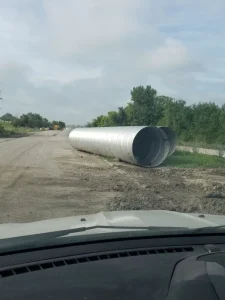
Supporting 43 Miles of Transportation Infrastructure
Corrugated metal pipe served as a major component of the overall project.
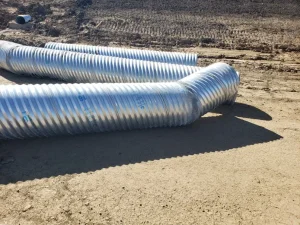
In total, more than 10,560 linear feet of corrugated metal pipe ranging from 15 inches to 54 inches in diameter were installed throughout the corridor. The project also included elbows, diaphragms, slotted drain systems, and metal end sections to support stormwater management across the site.
Altogether, corrugated metal pipe helped provide drainage infrastructure for approximately 43 miles of roadway improvements.
Projects such as the 2024 DOT Project of the Year: Exit 41 Interchange demonstrate how drainage infrastructure often plays a critical role in the success of major transportation investments.
Building Through Unprecedented Challenges
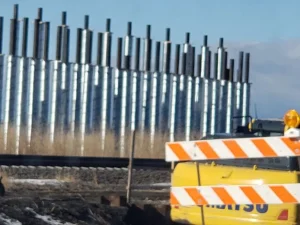
A significant portion of the Lincoln South Beltway was constructed during the height of the COVID-19 pandemic.
While many industries faced supply chain disruptions and material delays, the project team continued moving forward and maintained progress throughout construction. The ability to keep critical infrastructure work on schedule helped ensure the beltway could deliver its transportation and economic benefits to the region.
Large transportation projects often require strong coordination between contractors, suppliers, and public agencies. Similar collaboration contributed to the success of the Interstate Drainage Access MDT Wolf Creek Named Connections Project of the Year project.
Supporting Nebraska’s Future Growth
The impact of the Lincoln South Beltway extends far beyond transportation.
New commercial development has already begun taking shape along the corridor. A medical center, a new high school, and multiple housing developments have been constructed or planned to take advantage of improved access between Highway 77 and Highway 2.
The project demonstrates how transportation infrastructure can help unlock economic development opportunities while improving safety and mobility for local communities.
For Lincoln and the Nebraska Department of Transportation, the beltway represents the successful completion of a vision that began more than six decades ago and will continue supporting growth for generations to come. The completed beltway stands as a successful highway expansion project that will continue supporting mobility, safety, and economic development throughout the region.