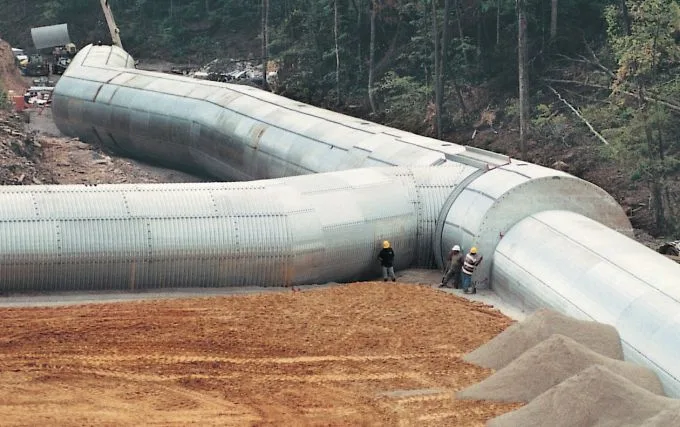
 Corrugated steel structural plate provides a durable, field-assembled solution for large-span culvert systems, bridge replacements, underpasses, stream crossings, tunnels large-span drainage structures, and rehabilitation projects. Manufactured from corrugated steel sections that are bolted together in the field, structural plate systems allow engineers and contractors to construct larger structures efficiently where transportation limitations, site access, installation conditions, or project size make prefabricated pipe impractical.
Unlike standard corrugated steel pipe, corrugated steel structural plate is fabricated from individual curved steel sections that are assembled on site to create structural plate culverts and other customized infrastructure solutions. These field-assembled systems are frequently selected for transportation infrastructure, pedestrian underpasses, stream crossings, and large-span drainage structures where structural performance, durability, and installation flexibility are priorities.
Available in multiple shapes, spans, corrugation profiles, and radii, corrugated steel structural plate systems can be tailored to meet hydraulic performance requirements, loading conditions, environmental considerations, and project-specific site challenges. Engineers evaluating design requirements may also review the Design Specifications Chart, explore Technical Resources, or compare options with Deep Corrugated Structural Plate systems for larger spans and heavier loading conditions.
Corrugated steel structural plate is frequently selected because it combines structural performance, installation flexibility, and long-term durability for structural plate culverts, bridge replacements, and other large-span drainage structures. Key benefits include:
- Large-span capabilities for culverts, underpasses, tunnels, and bridge replacement projects
- Field-assembled construction for sites with transportation or installation limitations
- Structural strength for demanding loading and earth cover requirements
- Design flexibility with multiple shapes, spans, and radii available
- Efficient installation supported by fabricator-provided assembly drawings
- Long service life with multiple coating options available for environmental protection
- Aesthetic versatility for visible transportation and stream crossing applications
Depending on project requirements, engineers may also compare Steel Box Culverts for open-bottom stream crossing applications or Pipe Arches for lower-rise drainage solutions.
Corrugation Profile, Plate Thicknesses, and Field Assembly
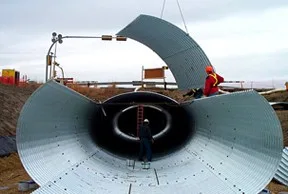
Corrugated steel structural plate systems use a standard 6″ × 2″ corrugation profile that provides structural strength while supporting efficient field assembly. Plates are commonly available in thicknesses ranging from 0.222 inches to 0.380 inches and are curved to specific radii based on project requirements.
Each plate is clearly marked by the fabricator and assembled in the field using bolted connections. Fabricators provide assembly drawings and installation guidance to support proper alignment and construction, making structural plate systems especially useful for large-span structures, custom shapes, and difficult-access sites.
Common Structural Plate Shapes and Applications
Corrugated steel structural plate systems are available in multiple configurations to meet hydraulic, structural, and clearance requirements. Shape selection depends on span requirements, site conditions, waterway size, loading considerations, and the intended use of the structure.
Common shapes include:
- Round structures for culverts, subdrains, sewers, service tunnels, and utility crossings
- Vertical ellipses for culverts, sewers, and hydraulic applications requiring increased vertical clearance
- Pipe arches for low-clearance stream crossings and culvert applications requiring improved hydraulic performance
- Underpasses for pedestrian, livestock, and vehicle crossings
- Arches for large waterway openings and transportation crossings
- Horizontal ellipses for grade separations, culverts, storm sewers, tunnels, and structural plate applications
- Pear-shaped structures for grade separations, culverts, storm sewers, and tunnels
- High-profile arches for larger waterway openings and structural applications
- Low-profile arches for low-rise drainage and transportation structures
- Special shapes for rehabilitation, lining existing structures, and custom project requirements
Corrugated Steel Structural Plate Coatings and Service Life
Corrugated steel structural plate is available with multiple coating options to support corrosion protection and long-term durability in varying environmental conditions. Engineers can review available corrugated steel pipe coatings, including Aluminum Coated Type 2 (ALT2) and polymer-coated steel systems, when evaluating service life and project-specific durability requirements.
For long-term planning, engineers may also use the Service Life Plate Calculator to estimate expected performance based on environmental conditions or review Engineering Studies & Technical Reports for additional research on steel drainage system performance.
Design Resources for Corrugated Steel Structural Plate
Designing a structural plate system requires evaluation of span, rise, loading conditions, hydraulic requirements, cover depth, backfill, coatings, and site-specific project needs. Engineers and designers can review Design Resources, compare requirements using the Design Specifications Chart, explore Technical Resources, and review Minimum Cover Requirements for additional engineering guidance.
Projects evaluating lifecycle costs may benefit from the Least Cost Calculator, while completed Project Spotlights can demonstrate how structural plate systems perform in real-world culvert, bridge replacement, underpass, and rehabilitation applications.
Common Structural Plate Shapes and Applications
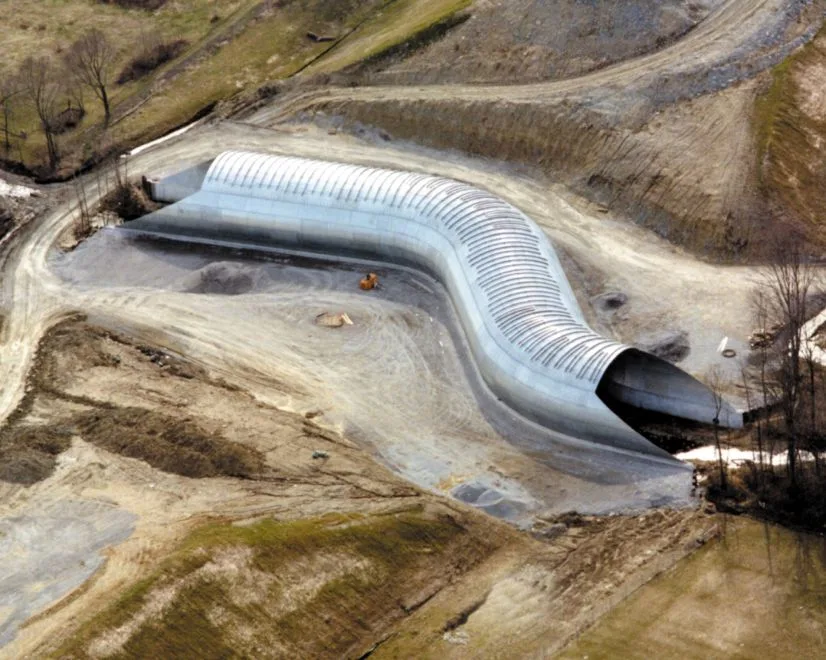
Corrugated steel structural plate systems are available in a wide variety of shapes and configurations to meet hydraulic, structural, clearance, and site-specific project requirements. Shape selection depends on factors such as required span and rise, waterway opening, loading conditions, available cover, and the intended function of the structure.
Because structural plate systems are field assembled from individual bolted steel sections, engineers and designers have flexibility to specify configurations that may not be practical with traditional prefabricated systems. Structural plate culverts, underpasses, tunnels, and large-span culvert systems can be configured for transportation infrastructure, stream crossings, stormwater conveyance, and rehabilitation projects requiring customized solutions.
Common structural plate configurations include round structures for culverts and utility crossings, pipe arches for low-clearance drainage applications, arches and underpasses for transportation projects, and horizontal or vertical ellipses for hydraulic and clearance requirements. These large-span drainage structures are frequently selected when site conditions demand durability, efficient installation, and long-term performance.
The chart below highlights common corrugated steel structural plate shapes and typical applications to help engineers and owners evaluate options based on project goals and site conditions. Engineers may also compare requirements using the Design Specifications Chart, review Design Resources, or explore additional Technical Resources for engineering guidance.
| Shapes and uses of corrugated steel structural plate | |||
| Shape | Range of Sizes | Common Uses | |
| Round | 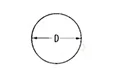 | 6 in. -51 ft | Culverts, subdrains, sewers, service tunnels, etc. All plates same radius. For medium and high fill (or trenches) |
| Vertical ellipse 5% nominal | 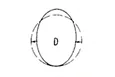 | 4-21 ft nominal;before elongating | Culverts, sewers, service tunnels, recovery tunnels. Plates of varying radii;shop favbrication. For appearance and hwhere backfill compaction is only moderate. |
| Pipe Arch | 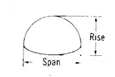 | Span x Rise 17 in, x 13 in. to 20ft 7 in x 13 ft 2 in. | Where headroom is limited, Has hydraulic advantages at low flows. Corner plate radius. 18 inches or 31 inches for structural plate. |
| Underpass* | 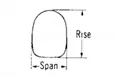 | Span x Rise 5ft 8 in, x 5 ft 9 in. to 20 ft 4 in. x 17 ft 9 in. | For pedestrians, livestock or /> vehicles (structural plate). |
| Arch | 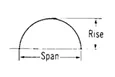 | Span x Rise 5 ft x 1 ft 9 1/2 in. to 82 ft x 42 ft | For low clearance large waterwway openinng, and aesthetics (structural plate). |
| Horizontal Ellipse | 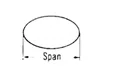 | Span 7-40 ft | Culverts, grade separations, sorm sewers, tunnels (structural plate). |
| Pear | 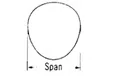 | Span 25-30 ft | Grade separations, culverts, storm sewer, tunnels (structural plate). |
| High Profile Arch | 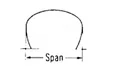 | Span 25-83 ft | Culverts, grade separations, storm sewers and tunnels. Ammunition magazines, earth covered storage (structural plate). |
| Low Profile Arch | 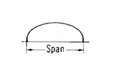 | Span 20-83 ft | Low-wide waterway enclosures, culverts, storm sewers (structural plate). |
| Specials | Various | For lining old structures or other spcial puposes. Special fabrication. | |
| Notes: *For equal area or clearance, the round shape is generally more economical and easier to assemble. | |||