The Real Halloween Horror Story Is at the Pump
Ghosts, goblins, and things that go bump in the night have nothing on one particularly frightening sight: diesel prices. For contractors, transportation agencies, and infrastructure professionals, rising fuel costs make transportation efficiency more important than ever. The real Halloween horror story isn’t lurking in a haunted house. It’s glowing on the digital display at the fuel pump.
According to the U.S. Energy Information Administration (EIA), the national average price of on-highway diesel reached $6.276 per gallon on October 19, 2026. That’s approximately $2.66 more per gallon than the same period last year. Diesel powers much of the equipment and transportation network supporting America’s infrastructure. From hauling construction materials to operating heavy machinery, fuel expenses influence nearly every stage of a project.
When prices climb, those additional costs can ripple throughout the construction supply chain. Fortunately, while nobody can wave a magic wand and lower diesel prices, smarter infrastructure decisions can help keep transportation costs from becoming a nightmare.
The Frightening Cost of Moving Materials
Transportation represents an important consideration when evaluating construction materials, particularly for large infrastructure projects. Every delivery requires fuel, equipment, personnel, and coordination. As transportation distances increase, so does the potential exposure to fluctuating fuel prices.
Consider a hypothetical delivery requiring 100 gallons of diesel. At the October 19 national average of $6.276 per gallon, fuel alone would cost approximately $628. One year earlier, that same fuel consumption would have cost approximately $362. That’s an additional $266 for the same amount of fuel, before accounting for other transportation expenses. Multiply those costs across dozens of material deliveries, and the financial implications become difficult to ignore.
For drainage infrastructure, the size and configuration of materials can significantly influence shipping requirements. Large pipe sections occupy considerable trailer space, making transportation efficiency an important part of project planning. For engineers and contractors evaluating corrugated steel pipe applications, transportation efficiency deserves attention alongside structural performance, installation requirements, and long-term value.
No Tricks, Just More Pipe Per Truck
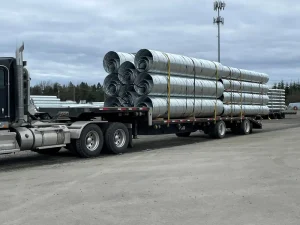
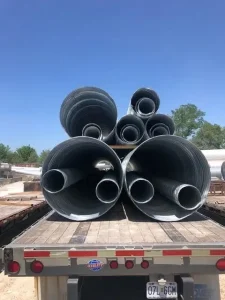
One of the most practical transportation advantages of corrugated steel pipe (CSP) is its ability to maximize available shipping space. Certain corrugated steel pipe configurations can be nested, allowing compatible sections to fit inside one another during transportation. This approach increases the quantity of material transported within a single shipment, potentially reducing the number of truckloads required for a project.
Unlike shipping arrangements that require individual pipe sections to occupy separate trailer space, nesting makes more efficient use of available transportation capacity. Depending on pipe dimensions and shipping requirements, fewer truckloads can translate into lower fuel consumption, reduced transportation expenses, and fewer vehicle trips between manufacturing facilities and construction sites. These advantages become especially valuable when diesel prices rise or projects require substantial quantities of drainage materials.
The NCSPA’s sustainability resources highlight the environmental benefits associated with efficient material transportation. By maximizing shipping capacity, contractors can reduce unnecessary hauling demands while supporting broader sustainability goals. For infrastructure professionals facing unpredictable fuel costs, getting more pipe onto each truck is one Halloween treat worth keeping.
A Lighter Load on Transportation Budgets
Nesting isn’t the only transportation advantage associated with corrugated steel pipe. Compared with heavier drainage alternatives, such as reinforced concrete pipe (RCP), CSP’s relatively lightweight construction can offer meaningful transportation and handling advantages. When diesel prices climb, the weight of construction materials becomes another important factor influencing delivery expenses.
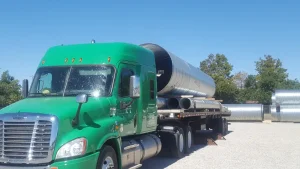
Commercial trucks must operate within established weight restrictions, which can limit the amount of material transported in a single shipment. Because reinforced concrete pipe is substantially heavier than comparable corrugated steel pipe, trucks carrying RCP may reach their allowable weight limits before using all available trailer space. CSP’s lighter weight, combined with its ability to nest certain configurations, can help maximize shipping efficiency and potentially reduce the number of deliveries required.
Weight also influences what happens after materials arrive at the construction site. Heavier pipe sections may require larger lifting equipment, additional handling considerations, and more fuel-intensive machinery during installation. Depending on project conditions, CSP’s lighter weight can simplify unloading, positioning, and installation while reducing equipment demands.
These advantages can be particularly valuable for roadway drainage projects, remote construction sites, and installations with limited equipment access. Although actual transportation and installation savings depend on pipe dimensions, project requirements, and site conditions, material weight deserves consideration when evaluating overall construction costs.
The NCSPA’s Why Choose Steel resources highlight how lightweight construction, efficient transportation, and installation flexibility contribute to the value of corrugated steel pipe. For contractors facing unpredictable diesel prices, reducing unnecessary hauling and equipment demands can help keep transportation expenses under control.
Why Haul It When You Can Make It? Mobile Mills Bring Manufacturing to the Job Site
For certain large-scale infrastructure projects, mobile corrugated steel pipe mills offer another approach to reducing transportation demands. Instead of manufacturing finished pipe at a distant facility and transporting individual sections to the construction site, mobile mills bring production directly to the project. These portable manufacturing systems use steel coils delivered to the location to produce corrugated steel pipe on-site, potentially reducing the number of truckloads required.
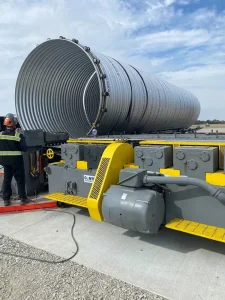
The advantages aren’t just theoretical. During the North Dakota Highway 23 roadway improvement project, mobile CSP manufacturing helped eliminate more than 75 truckloads of finished pipe deliveries. The project demonstrates how on-site production can address transportation challenges while supporting construction efficiency.
Mobile mills can be particularly valuable for remote infrastructure projects, major transportation improvements, and installations requiring substantial quantities of pipe. On-site manufacturing may also provide greater flexibility in coordinating production with construction activities. Depending on project conditions, contractors can reduce repeated finished-pipe deliveries and minimize certain material handling and storage requirements.
Of course, mobile manufacturing isn’t practical for every project. Equipment mobilization, production quantities, site accessibility, and project specifications all influence whether on-site production makes economic sense. Mobile mills also require transportation for equipment and steel coils, so they do not eliminate fuel consumption entirely. However, when conditions are favorable, bringing manufacturing directly to the construction site can provide meaningful logistical benefits.
And when diesel prices are delivering more tricks than treats, bringing the mill to the project instead of hauling the pipe to the project can be an attractive option.
Sustainability That Isn’t Just Smoke and Mirrors
Transportation efficiency offers benefits beyond the construction budget. Every truck trip consumes energy and produces emissions, making opportunities to reduce unnecessary deliveries valuable from both financial and environmental perspectives. Corrugated steel pipe offers several ways to support these goals through nesting, lightweight construction, and mobile manufacturing on suitable projects.
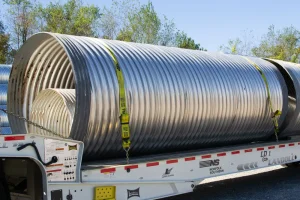
These transportation advantages complement the broader environmental characteristics of steel infrastructure. Steel is recyclable, and corrugated steel pipe manufacturing incorporates recycled material into new products. Its durability and potential for long service life further support responsible resource management.
The NCSPA recently released its industry-wide Environmental Product Declaration (EPD), providing independently verified environmental information for corrugated steel pipe. Developed through a comprehensive Life Cycle Assessment, the declaration evaluates environmental impacts associated with defined stages of CSP production, including raw material acquisition, upstream transportation, and manufacturing. The declaration also reports that representative CSP contains at least 55% recycled steel by mass.
For engineers, municipalities, and transportation agencies, these resources provide valuable information for evaluating infrastructure materials. Understanding transportation impacts alongside manufacturing, durability, and end-of-life considerations supports more informed decisions. After all, sustainable infrastructure shouldn’t rely on smoke, mirrors, or Halloween magic. It should rely on measurable information and sound engineering.
Keeping Infrastructure Costs from Coming Back to Haunt You
Transportation costs represent only one part of an infrastructure project’s overall financial picture. Initial material expenses, installation requirements, maintenance needs, and expected service life all influence long-term value. A drainage solution that offers efficient transportation but requires frequent replacement may not provide the best overall investment.
Likewise, a material that simplifies installation or reduces long-term maintenance requirements may deliver benefits beyond its initial purchase price. That’s why infrastructure decisions should consider the complete project rather than focusing exclusively on upfront material costs. By evaluating transportation efficiency alongside structural performance, durability, and service life, project teams can make more informed infrastructure investments.
The NCSPA’s technical resources provide engineers and contractors with information to support the design and evaluation of corrugated steel pipe systems. These resources help project teams consider material performance across transportation, drainage, and stormwater applications. As fuel prices fluctuate, understanding how materials are manufactured, shipped, and installed becomes increasingly important.
This Halloween, Choose Treats Over Transportation Tricks
Diesel prices may be frightening, but inefficient material transportation doesn’t have to make matters worse. From nesting pipe sections to maximizing truckload efficiency, corrugated steel pipe offers practical opportunities to reduce transportation demands. For larger projects, mobile mills can take that efficiency further by bringing manufacturing directly to the construction site.
These advantages can help contractors manage transportation expenses while supporting broader sustainability goals through reduced fuel consumption and fewer material deliveries. Combined with steel’s recyclability, durability, and long-term performance, efficient transportation contributes to a more comprehensive approach to infrastructure planning.
As construction professionals navigate unpredictable fuel costs, evaluating how materials reach the job site deserves greater attention. Because this Halloween, the only thing that should be haunting your construction site is a good ghost story, not the cost of getting your materials there.