By: ViaCon
Project Summary
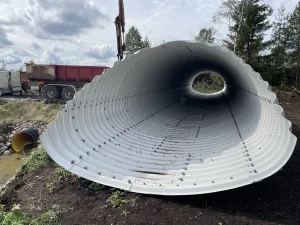
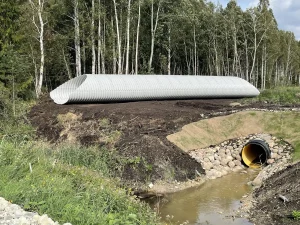
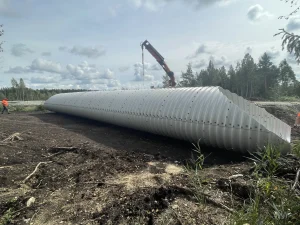
This innovative wind farm access road project demonstrated how steel bridge structures can reduce construction time, lower environmental impacts, and improve long-term performance. Using deep corrugated steel structures, the project delivered a durable crossing solution while supporting renewable energy development.
Supporting Renewable Energy Infrastructure
As wind energy projects continue expanding across Europe and North America, developers face a common challenge: building access roads capable of supporting construction equipment while minimizing environmental impacts.
These roads are essential for transporting turbine components, construction materials, and maintenance equipment. However, access routes often cross streams, drainage channels, and environmentally sensitive areas where traditional bridge construction can create significant disruption.
Project owners increasingly seek solutions that balance construction efficiency with sustainability goals. This need has driven growing interest in steel bridge systems that can be installed quickly while reducing impacts on surrounding ecosystems.
Submitted by ViaCon, this project highlights how deep corrugated steel structures can support renewable energy infrastructure while advancing environmental objectives.
A Faster Alternative to Traditional Bridge Construction
Traditional concrete bridge construction often requires extensive site preparation, large material quantities, and lengthy construction schedules.
For wind farm projects, delays can affect broader construction timelines and increase costs throughout the development process.
To address these challenges, ViaCon utilized its Multiplate steel structure system to create a bridge crossing capable of supporting wind farm access roads. The structure was installed in approximately one week, significantly reducing construction time compared to conventional bridge alternatives.
Rapid installation continues to be a major advantage of steel infrastructure systems. Similar benefits have been demonstrated on projects such as the Railway Line Rehabilitation Project and the Union Pacific Bridge Replacement, where maintaining schedules and minimizing disruptions were key project objectives.
Reducing Environmental Impact
Environmental stewardship played a central role in the project’s design.
Steel structures require fewer raw materials than many traditional bridge alternatives and can often be installed with less disturbance to surrounding landscapes. Reduced construction duration also means less time spent working within environmentally sensitive areas.
The project demonstrates how infrastructure can support renewable energy development while limiting impacts on natural resources. Similar environmental goals drove the award-winning NM DOT I-25 Wildlife Crossing Project, where buried bridge structures helped preserve wildlife connectivity while improving transportation safety.
Organizations interested in sustainable infrastructure practices can explore NCSPA’s Sustainability resources and Environmental Calculator to better understand the environmental benefits of steel solutions.
Long-Term Durability for Critical Access Roads
Construction speed alone is not enough for infrastructure serving wind energy facilities.
Access roads must support heavy equipment throughout construction and remain reliable for decades of maintenance operations. Long-term durability is essential, especially in remote locations where repairs can be costly and disruptive.
The steel bridge structures utilized on this project provide an expected service life exceeding 100 years. Their durability helps reduce future replacement needs while supporting the long-term viability of renewable energy infrastructure.
Engineers evaluating similar applications can utilize NCSPA’s Service Life Calculator and review additional performance information within NCSPA’s Studies & Reports.
Building a More Sustainable Future
Renewable energy projects require infrastructure that aligns with broader sustainability goals.
This wind farm access road project demonstrates how steel bridge solutions can help developers reduce environmental impacts, accelerate construction schedules, and deliver durable long-term performance. By combining rapid installation with exceptional service life, deep corrugated steel structures provide an effective solution for supporting the next generation of renewable energy development.
As wind energy projects continue to expand worldwide, projects like this offer a practical model for balancing infrastructure needs with environmental responsibility.