By: ViaCon Türkiye
Project Summary
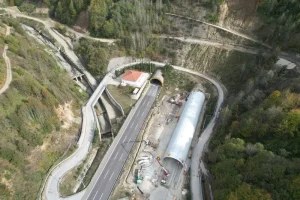
The Anatolian Highway Tunnel Extension utilized a structural plate tunnel extension to address recurring landslide challenges along one of Türkiye’s most important transportation corridors. Submitted by ViaCon Türkiye, the project expanded tunnel capacity while minimizing traffic disruptions and reducing construction time.
Few transportation corridors are more important to Türkiye than the Anatolian Highway connecting Istanbul and Ankara.
For years, landslides in the Bolu Mountain Pass created ongoing challenges for motorists, freight movement, and highway operators. Increasing rainfall and unstable slopes frequently disrupted tunnel entrances and exits, creating bottlenecks along a route critical to regional commerce. Seeking a faster alternative to traditional tunnel expansion methods, the General Directorate of Highways selected a structural plate solution that dramatically reduced construction time while maintaining traffic flow.
A Growing Landslide Challenge
The Bolu Mountain Pass presents unique geographic and environmental challenges. Steep terrain combined with increased rainfall has made landslides a recurring concern throughout the corridor.
These events can block traffic, damage infrastructure, and create costly delays for both passenger vehicles and commercial transportation. Because the Anatolian Highway serves as a vital link between two of Türkiye’s largest cities, prolonged closures were not an option.
Transportation agencies around the world continue to face similar resilience challenges. Resources such as NCSPA’s Resiliency page and Technical Resources highlight infrastructure solutions designed to address demanding environmental conditions.
A Structural Plate Tunnel Extension Solution
Rather than utilizing traditional reinforced concrete construction, project leaders selected ViaCon Steel Culvert Systems to extend the existing tunnel infrastructure.
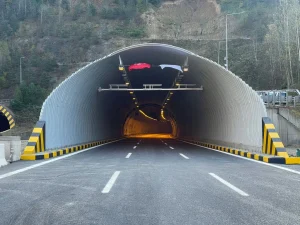
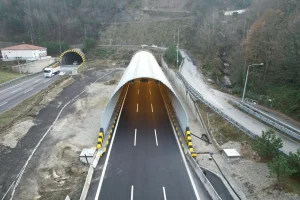
The project added approximately 295 feet to the Ankara-bound tunnel entrance, increasing the total tunnel length to more than 10,200 feet. The extension utilized a single-span ViaCon structure featuring the Supercor Special 62S cross section, allowing the new structure to integrate seamlessly with the existing tunnel.
Structural plate solutions continue to gain attention for transportation applications because they can accelerate construction while maintaining long-term durability. Similar benefits have been demonstrated on projects such as the Railway Line Rehabilitation and the Union Pacific Bridge Replacement, where maintaining operations during construction was a primary objective.
Built in Days Instead of Months
The project’s most remarkable achievement was its construction schedule.
Crews erected the 295-foot-long structure in just 15 days. The entire project, including tunnel extension work and roadway integration, was completed and reopened to traffic in approximately 30 days.
Traditional reinforced concrete alternatives would have required substantially longer construction periods and greater traffic disruption. By reducing construction duration, the project minimized impacts on commuters and freight traffic while quickly restoring full corridor functionality.
Engineers evaluating construction alternatives can compare solutions using NCSPA’s Least Cost Calculator.
Supporting Transportation Resilience
The Anatolian Highway Tunnel Extension demonstrates how innovative structural plate systems can help transportation agencies address complex environmental challenges without sacrificing mobility.
By combining rapid installation, long-term durability, and minimal traffic disruption, the project delivered a practical solution for one of Türkiye’s most important transportation corridors. As climate-related challenges continue to affect infrastructure worldwide, projects like this highlight the importance of resilient, adaptable transportation solutions.
Additional information about Türkiye’s highway network can be found through the General Directorate of Highways (KGM), the agency responsible for managing the country’s national roadway system.