Corrugated steel pipe (CSP) has been trusted for generations to move stormwater, protect infrastructure, and deliver long-term performance in demanding environments. From rural culverts to major transportation systems, corrugated steel pipe supports reliable stormwater drainage pipe systems designed for long-term performance.
At NCSPA, we connect engineers, contractors, DOTs, municipalities, and decision-makers with trusted resources, technical guidance, and real-world solutions designed to outperform and outlast the alternatives.
Explore Why Steel
What Is CSP? | Why Engineers Choose CSP | CSP vs Concrete & Plastic
Performance & Resilience | Installation & Versatility | Sustainability & Manufacturing
Real Projects | Build With Confidence | FAQ
What Is Corrugated Steel Pipe?
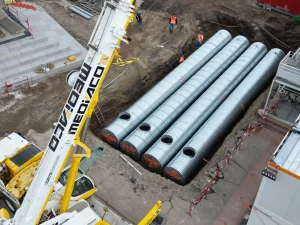
Corrugated steel pipe (CSP), sometimes referred to ascorrugated metal pipe (CMP), is a durable drainage solution used across many types of infrastructure. Common applications include culverts, stormwater drainage pipe systems, detention projects, stream crossings, and transportation networks.
Its corrugated profile strengthens the steel, allowing it to withstand heavy live loads while remaining flexible enough to adapt to soil movement and environmental stress.
Unlike rigid systems that may crack under shifting conditions, CSP distributes loads efficiently while maintaining hydraulic performance. Corrugated steel pipe is available in galvanized, aluminized Type 2 (ALT2), polymer-coated, and specialty configurations. Because of this flexibility, engineers, contractors, municipalities, and departments of transportation continue to rely on CSP across North America.
NCSPA-member manufacturers provide a wide range of steel drainage solutions including:
•Round corrugated steel pipe
•Pipe-arch structures
•Structural plate systems
•Spiral rib pipe
•Stormwater detention and infiltration systems
•Custom fabricated drainage structures
Whether you are designing a municipal storm sewer, replacing an aging culvert, or planning a major infrastructure upgrade, NCSPA offers the tools and guidance needed to support your project from concept to completion. Explore our Design Resources, review our Technical Resources, or use our Pipe Service Life Calculator to evaluate long-term performance.
Why Engineers Choose Steel Drainage
Why Steel Continues to Stand Out
From culverts and stormwater drainage pipe systems to detention and rehabilitation projects, corrugated steel pipe (CSP), also known as corrugated metal pipe (CMP), continues to be trusted because it balances performance, constructability, sustainability, and long-term value. Here are five reasons engineers, contractors, and agencies continue to specify steel drainage solutions.
Top 5 Reasons Engineers Choose CSP
- Proven Longevity
Corrugated steel pipe can last 75 to 100+ years when the appropriate coating and environmental conditions are considered. Engineers can evaluate expected performance using the Pipe Service Life Calculator and Service Life Chart, while coating-specific options such as Polymer Coating and Aluminum Coated Type 2 (ALT2) help engineers design for demanding environments. - Faster, Smarter Installation
Lightweight, nestable sections allow for quicker installation, smaller crews, and less heavy equipment compared to many traditional alternatives. Faster installs can reduce traffic disruption, labor costs, and project timelines. Review our Design Resources and real-world Project Spotlights to see CSP in action. - Sustainable Infrastructure
Made from recycled steel and fully recyclable at the end of its service life, CSP supports sustainability initiatives and circular infrastructure goals. Learn more about our commitment to sustainable steel infrastructure. - Custom Fit for Any Site
Round, pipe-arch, elliptical, spiral rib, and structural plate systems provide flexibility across a wide range of hydraulic demands, cover limitations, and site conditions. Whether the challenge is low cover, span requirements, or difficult terrain, steel offers adaptable solutions. - American Made, Standards Compliant
NCSPA-member manufacturers produce steel drainage products in the United States using domestic steel, supporting Buy America and Build America, Buy America (BABA) requirements. Learn more in our Policy Resources.
Corrugated Steel Pipe vs Concrete & Plastic Pipe
Smarter From The Start
Choosing the right drainage material means balancing service life, installation requirements, resilience, environmental conditions, and long-term cost. Corrugated steel pipe (CSP), commonly called corrugated metal pipe (CMP), consistently competes with and often outperforms reinforced concrete pipe (RCP) and plastic pipe across the factors that matter most to engineers, contractors, and municipalities.
Whether the priority is faster installation, lifecycle cost, sustainability, or performance under demanding site conditions, understanding the differences between materials helps teams make informed infrastructure decisions.
The comparison below outlines how corrugated steel pipe stacks up against reinforced concrete and HDPE pipe across key performance categories.
CSP vs RCP vs HDPE: Side-by-Side Comparison
| Factor | Corrugated Steel Pipe (CSP) | Reinforced Concrete Pipe (RCP) | HDPE / Plastic Pipe |
|---|---|---|---|
| Structural Strength | High; steel ribs flex to carry live loads without cracking | High compressive strength but rigid, prone to cracking if subgrade shifts | Moderate; relies on soil enclosure for stiffness |
| Installation Speed | Lightweight sections set quickly with small crews and light equipment | Heavy pieces require cranes, larger crews, and traffic control | Lightweight like CSP, but often needs precise imported bedding |
| Service Life | 75–100 years with appropriate coatings | 50–75 years; durability drops in aggressive soils | 50 years; UV and chemical exposure can shorten life |
| Environmental Profile | Made from recycled steel and 100 percent recyclable | High embodied carbon; limited reuse options | Petroleum-based resin, difficult to recycle at scale |
| Jobsite Footprint | Fewer trucks and lighter picks reduce fuel use and congestion | More truckloads and heavy picks increase site impacts | Lighter picks, but additional bedding and more trucks required |
| Installed Cost | Lowest installed cost per linear foot; lightweight pipe and rapid placement cut labor and equipment expenses | Higher installed costs due to heavy handling, crane time, and reinforced bedding drive up total price | Higher installed cost due to additional bedding material and higher quality backfill material |
| Domestic Sourcing | Readily sourced from U.S. mills and fabricators | Aggregates may be local, but cement and rebar often imported | HDPE resin frequently imported, complicates BABA compliance |
See the Difference
Still not convinced? Check out these direct comparison flyers that break it all down:
- Spiral Rib CSP vs Polypropylene
- Spiral Rib CSP vs HDPE
- Spiral Rib CSP vs RCP
- Top 10 Reasons to Choose CMP Drainage
These side-by-side documents make it easy to see how CSP outperforms in strength, cost, durability, and compliance—whether you’re comparing to plastic or concrete.
Performance and Resilience
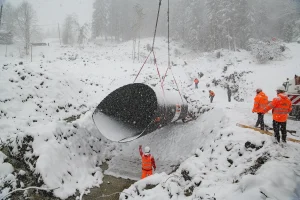
Corrugated steel pipe (CSP), also known as corrugated metal pipe (CMP), is engineered to perform under demanding conditions where strength, durability, and adaptability matter most. By combining the high tensile strength of steel with a corrugated profile that distributes loads efficiently, CSP provides long-term structural performance in environments where rigid systems may struggle.
Unlike rigid pipe systems that can crack or separate when soils shift, corrugated steel pipe flexes with minor settlement while maintaining structural integrity and hydraulic performance. This flexibility helps reduce the risk of joint separation, cracking, and costly maintenance over time.
Available in galvanized, aluminized Type 2 (ALT2), polymer-coated, and specialty configurations, CSP can be selected to match a wide range of environmental conditions, abrasion levels, and site chemistry. Explore our CSP Coatings, Technical Resources, and Service Life Studies to determine the best fit for your project.
How CSP Performs Under Pressure
Built for Long-Term Service Life
With the proper coating and environmental considerations, corrugated steel pipe can provide 75 to 100+ years of service life in varied soils, climates, and hydraulic conditions. Many documented installations have exceeded a century of performance. Use our Pipe Service Life Calculator to evaluate expected performance based on your project conditions.
Extreme Flood Events
During high-flow events, corrugated steel pipe maintains hydraulic capacity and structural integrity while helping protect roads, embankments, and upstream infrastructure. Explore real-world examples in our Project Spotlights.
Seismic and Settlement Performance
Steel’s ductility allows CSP to flex with ground movement and minor settlement, helping maintain functionality in seismic regions and shifting soils. Unlike rigid systems that may crack or separate under movement, corrugated steel pipe adapts to changing conditions while maintaining performance.
Rehabilitation and Repair
When repairs are needed, corrugated steel pipe can often be re-rounded, relined, or rehabilitated, reducing costs and minimizing disruption compared to full replacement. For additional guidance, review our Design Resources and Technical Resources.
When conditions become more demanding, engineers can specify from a wide range of CSP Coatings to match site chemistry and abrasion needs. In environmentally sensitive areas, Fish Passage Solutions help restore stream continuity while supporting ecological goals. For aging infrastructure and emergency repairs, explore Rehabilitation Solutions and Seismic Design guidance to see how steel performs under pressure.
Whether your project faces corrosive environments, hydraulic demands, settlement concerns, or long-term resilience requirements, NCSPA-member manufacturers offer a wide range of steel drainage solutions designed to meet real-world performance challenges.
Installation and Versatility
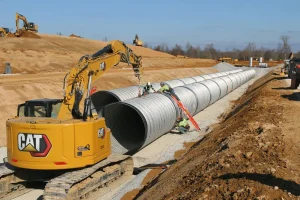
Corrugated steel pipe (CSP), also known as corrugated metal pipe (CMP), is engineered for efficient handling, faster installation, and adaptability across a wide range of site conditions. Lightweight, nestable sections reduce shipping volume and simplify handling in the field, helping contractors complete installations faster while minimizing labor, equipment needs, and traffic disruption.
Available in a wide variety of lengths and configurations, corrugated steel pipe minimizes the number of joints required, improving installation efficiency and long-term system performance. In many applications, smaller crews and lighter equipment can complete installations significantly faster than heavier alternatives, helping projects stay on schedule and within budget.
Fewer Joints. Faster Installs.
Joint systems can be selected to meet both hydraulic and structural performance requirements, including fully watertight connections where needed. From slope ends and bevels to elbows and specialty fittings, corrugated steel pipe can be customized to meet project-specific demands.
Need something more complex? NCSPA-member fabricators routinely manufacture custom manifolds, risers, reducers, tees, and transitions with quick turnaround times to support unique site conditions and design challenges.
Built for Challenging Sites
For large projects or remote locations, corrugated steel pipe can even be fabricated onsite using a mobile mill, reducing transportation constraints and allowing pipe lengths to be tailored directly to field conditions.
Steel drainage solutions are available for a wide range of applications:
Round Corrugated Steel Pipe (6″–144″)
Ideal for storm drains, culverts, detention systems, infiltration systems, and general stormwater conveyance.
Pipe-Arch and Elliptical Shapes
Designed to maximize hydraulic capacity while reducing cover requirements in constrained profiles and environmentally sensitive areas.
Structural Plate Systems (Spans up to 40′)
Used to replace aging short-span bridges, rehabilitate crossings, and maintain traffic flow while minimizing road closure durations.
Explore real-world applications in our Project Spotlights or use our interactive Find a Project tool to see corrugated steel pipe solutions in action across North America.
From Standard Corrugated Steel Pipe and Spiral Rib Pipe to Pipe Arches, Double Wall Corrugated Steel Pipe, and Structural Plate Systems, steel adapts to nearly any site condition. Need something specialized? NCSPA member fabricators also provide custom Fabricated Fittings & End Treatments, Steel Box Culverts, and Special Applications designed around unique hydraulic and structural needs.
Need additional installation guidance? Explore our Installation Specifications, Minimum Cover Requirements, and Tracked Vehicle Load Calculator to better understand cover depth and construction loading. For projects requiring specialized connections, Corrugated Steel Pipe Coupling Systems support long-term structural and hydraulic performance.
Sustainability and American Manufacturing
Corrugated steel pipe (CSP), also known as corrugated metal pipe (CMP), supports long-term infrastructure goals by combining durability, recycled materials, and domestic manufacturing into one resilient drainage solution. From reducing embodied carbon to simplifying Buy America compliance, steel drainage systems help agencies, engineers, and contractors balance environmental priorities with long-term performance.
Sustainable by Design
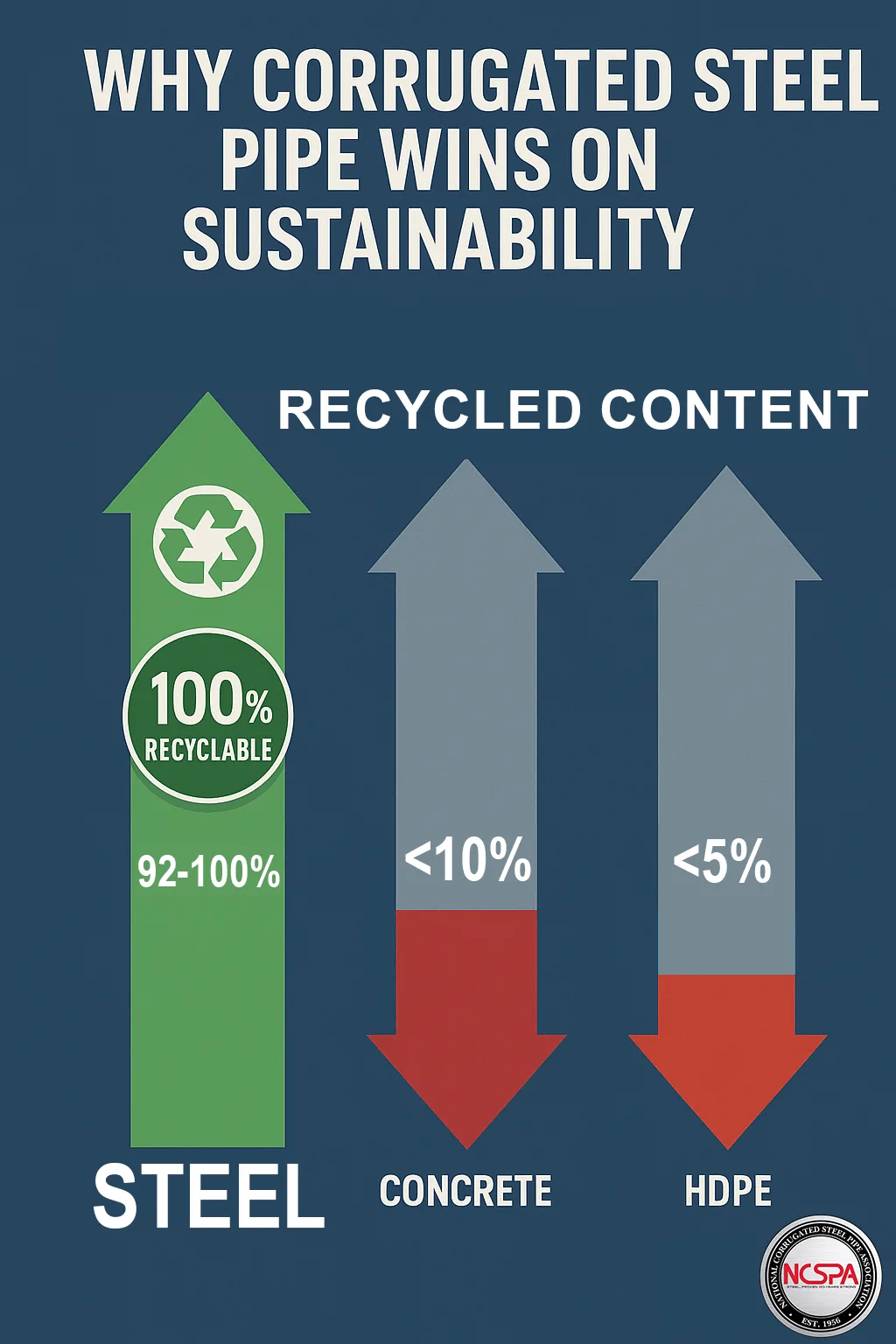
Every corrugated steel pipe installation begins with recycled steel and ends with 100% recyclability, making CSP one of the most circular infrastructure materials available. Most corrugated steel pipe contains a minimum of 70% recycled steel content, helping reduce embodied carbon compared to many alternative materials.
Unlike petroleum-based products that can be difficult to reclaim at scale, steel can be recovered, reprocessed, and reused without loss of quality, keeping valuable material in circulation and out of landfills.
CSP also supports sustainability goals through:
• Lightweight, nestable shipments that reduce truckloads and transportation emissions
• Faster installation with smaller crews and lighter equipment
• Long service life that reduces replacement frequency and lifecycle impacts
• Low maintenance requirements that help lower long-term operational costs
Learn more about our commitment to sustainability and recycled steel infrastructure.
Looking for measurable environmental benefits? Our Environmental Calculator and Recycled Content Chart help agencies and engineers better understand recycled steel content and environmental impact. For detention, infiltration, and treatment applications, explore our Stormwater Management Systems solutions.
Built in America
When it comes to supporting American jobs, domestic manufacturing, and infrastructure investment, corrugated steel pipe delivers.
All NCSPA-member manufacturers produce their products in the United States using domestic steel, helping agencies and contractors support Buy America and Build America, Buy America (BABA) requirements while reducing procurement complexity and waiver risk.
By specifying American-made steel drainage solutions, project teams can support domestic mills, strengthen local supply chains, and improve confidence in material availability and standards compliance.
Explore our Policy Resources to learn more about domestic sourcing requirements and compliance guidance.
Real Projects. Real Performance.
From mountain stream restorations to major transportation corridors, corrugated steel pipe (CSP), also known as corrugated metal pipe (CMP), continues to solve complex infrastructure challenges across North America. Engineers, contractors, and agencies rely on steel drainage solutions to improve hydraulic performance, reduce installation time, minimize maintenance, and extend service life in demanding environments.
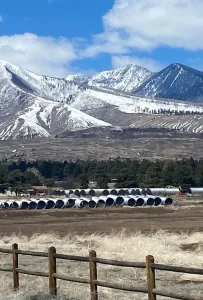
No two projects are identical, which is why NCSPA-member manufacturers provide solutions for everything from low-cover installations and environmental restoration to emergency replacements and large-span crossings.
See Corrugated Steel Pipe in Action
Transportation & DOT Projects
Departments of transportation across the country rely on corrugated steel pipe for culvert replacements, stormwater conveyance, and short-span bridge solutions. Lightweight sections, faster installation, and reduced traffic disruption help agencies complete projects efficiently while maintaining long-term durability.
Explore real-world transportation infrastructure examples in our Project Spotlights.
Stream Restoration & Environmental Projects
Corrugated steel pipe and structural plate solutions help restore natural stream flow, improve fish passage, and protect sensitive habitats while maintaining hydraulic efficiency. Pipe-arch and embedded invert designs are frequently used to balance infrastructure performance with environmental stewardship.
See how engineers are protecting waterways in our Project Spotlights.
Stormwater Detention & Urban Drainage
In space-constrained environments, corrugated steel systems provide efficient underground stormwater storage and conveyance while maximizing usable land above ground. Municipalities and developers use steel detention systems to manage runoff, improve water quality, and meet site requirements.
Learn more through our Design Resources and Technical Resources.
Emergency Repairs & Rehabilitation
When aging infrastructure fails, speed matters. Corrugated steel pipe can often be installed quickly to restore crossings, reduce closures, and minimize disruption to communities and transportation networks.
Explore rapid-response project examples in our Project Spotlights.
Find a Project Near You
Want to see corrugated steel pipe in action? Explore real-world applications ranging from emergency culvert replacements and wildlife crossings to stormwater detention systems and award-winning rehabilitation projects. Recent highlights include the Buckingham Creek Rehabilitation Project in Minnesota, emergency highway restoration in Indiana using polymer-coated steel pipe, and award-winning stormwater systems supporting large-scale commercial development.
From culverts and stream crossings to stormwater detention systems and bridge replacements, these projects demonstrate how steel drainage infrastructure performs under real-world conditions.
Build with Confidence
Whether you are designing a culvert, evaluating stormwater infrastructure, planning a rehabilitation project, or navigating Buy America requirements, NCSPA provides the tools and technical guidance to help move projects forward with confidence.
Our website serves as an all-in-one hub for engineering support, technical education, and real-world performance insights, including:
•Easy-to-use Calculators & Charts to support design, service life evaluation, storage capacity, minimum cover, and installation planning
•Comprehensive Technical Resources including specifications, manuals, brochures, installation guidance, and field performance information
•Real-world Project Spotlights that demonstrate how corrugated steel pipe performs across transportation, environmental, stormwater, and rehabilitation applications
•Policy Resources to support ASTM, AASHTO, Buy America, and Build America, Buy America (BABA) compliance considerations
Whether you are evaluating culverts, storm sewers, buried bridges, detention systems, or specialty applications, our resource library connects engineers and contractors to calculators, technical guidance, webinar recordings, product resources, and field-proven project examples. Explore Technical Resources, Design Resources, Webinar Recordings, Videos, and Studies & Reports to support your next project with confidence.
Investing in the Future of Infrastructure
NCSPA is also committed to advancing the future of the drainage industry through the NCSPA Education & Research Institute (NERI). NERI supports meaningful research, academic partnerships, and scholarship opportunities that help prepare the next generation of engineers and infrastructure professionals.
Learn more about how NERI is helping shape the future of resilient, sustainable, American-made infrastructure.
Ready to Get Started?
Got a project on the horizon? Explore our Member Directory to find an NCSPA manufacturer near you, browse our Resource Library, or discover real-world solutions through our Find a Project map.
Frequently Asked Questions About Corrugated Steel Pipe
What does CSP stand for?
CSP stands for corrugated steel pipe, a durable steel drainage solution commonly used for culverts, storm sewers, stormwater detention systems, stream crossings, and transportation infrastructure. Its corrugated profile increases strength while allowing the pipe to flex with changing soil conditions and live loads.
Is corrugated metal pipe the same as corrugated steel pipe?
Yes. Corrugated metal pipe (CMP) is a common industry term used to describe corrugated steel pipe (CSP). While some people use CMP broadly to describe various metal drainage products, NCSPA primarily focuses on steel drainage solutions designed for culverts, stormwater systems, detention applications, and transportation infrastructure.
How long does corrugated steel pipe last?
With proper coating selection and environmental considerations, corrugated steel pipe can provide 75 to 100+ years of service life. Factors such as soil chemistry, water pH, abrasion levels, and coating type all influence expected longevity. Use our Pipe Service Life Calculator to evaluate project-specific conditions.
What coatings are available for corrugated steel pipe?
Corrugated steel pipe is available in several coating options designed to match environmental and hydraulic conditions, including:
• Galvanized Steel for many standard drainage applications
• Aluminized Type 2 (ALT2) for enhanced corrosion performance
• Polymer-Coated Steel for aggressive environments and extended service life
• Specialty coatings and paved inverts for abrasion resistance and unique site conditions
Explore our Technical Resources for coating guidance and design information.
Is corrugated steel pipe better than concrete?
The best drainage solution depends on project goals, site conditions, hydraulic requirements, and budget. Corrugated steel pipe is often selected for its fast installation, long service life, lightweight handling, flexibility, and lower installed costs, while reinforced concrete pipe may be preferred in certain applications requiring rigid systems. Comparing performance, constructability, and lifecycle costs helps engineers determine the right fit.
Is corrugated steel pipe sustainable?
Yes. Most corrugated steel/corrugated metal pipe contains a minimum of 70% recycled steel content and is 100% recyclable at the end of its service life. Lightweight, nestable shipments also reduce transportation impacts, helping support sustainability and long-term infrastructure goals.
Is corrugated steel pipe Buy America compliant?
Yes. NCSPA-member manufacturers produce their products in the United States using domestic steel, helping support Buy America and Build America, Buy America (BABA) requirements. Visit our Policy Resources for more information.
What sizes are available for corrugated steel pipe?
Corrugated steel pipe,, also known as corrugated metal pipe (CMP), is available in a wide range of diameters and configurations to meet varying hydraulic and structural demands. Standard round pipe sizes typically range from 6 inches to 144 inches, while pipe-arch, elliptical, spiral rib, and structural plate systems offer additional flexibility for challenging site conditions.
When should pipe-arch be used instead of round pipe?
Pipe-arch structures are often used when projects require greater hydraulic capacity with reduced cover, or when maintaining natural streambeds and environmental conditions is important. They are frequently selected for stream crossings, environmentally sensitive areas, and locations with vertical clearance limitations.
What is the difference between corrugated steel pipe and structural plate?
Corrugated steel pipe is commonly used for culverts, storm drains, and stormwater systems using manufactured pipe sections. Structural plate systems are assembled from bolted steel plates in the field and are often used for large spans, bridge replacements, tunnels, and rehabilitation projects where standard pipe dimensions are insufficient.
Can corrugated steel pipe be used for stormwater detention systems?
Yes. Corrugated steel pipe is widely used in stormwater detention and retention systems, particularly where underground storage is needed to maximize usable land above ground. Steel detention systems can help manage runoff, improve water quality, and support municipal stormwater requirements.